Estate basics: probate, deemed disposition, final return
Canada has no estate tax and no inheritance tax, which is true and routinely mistaken for "nothing is taxed at death". Three separate mechanisms apply, and together they are usually the largest single tax event of a lifetime.
One: the final return
A final tax return covers income from January 1st to the date of death. It is filed by the executor, at ordinary rates, with all the ordinary credits. This part is unremarkable — it is simply the last year, usually a partial one.
Two: the deemed disposition
This is where the tax is. A large RRIF is fully taxable, all at once, which for a substantial balance means most of it is taxed at the top marginal rate — a rate the deceased may never have paid in any working year.
Three things escape it. A spouse — assets roll over and the disposition defers to the second death. A principal residence — the gain is exempt. And a TFSA — no tax at all, which is the entire reason it is the last account to spend.
Three: probate
Probate is the court process validating a will, and provinces charge for it — some as a percentage of estate value, some a nominal flat fee, and the difference between the two extremes is substantial. It is a fee on value, not a tax on income, which is why it is a separate line.
Assets that pass by beneficiary designation — registered accounts, insurance — generally bypass the estate and therefore probate. Jointly held property with right of survivorship does too. Which is what makes designations worth reviewing, and worth an episode of their own next.
The terminal year, decomposed
Dan & Marie — 58 and 56, Alberta. Dan retires at 62 with a defined-benefit pension; Marie retires at 60. Their RRSPs are very different sizes, which matters later.
Dan and Marie’s gross estate is $1,904,419. Probate takes $525 and the deemed disposition triggers $156,244 of tax, leaving $1,747,650 to their beneficiaries.
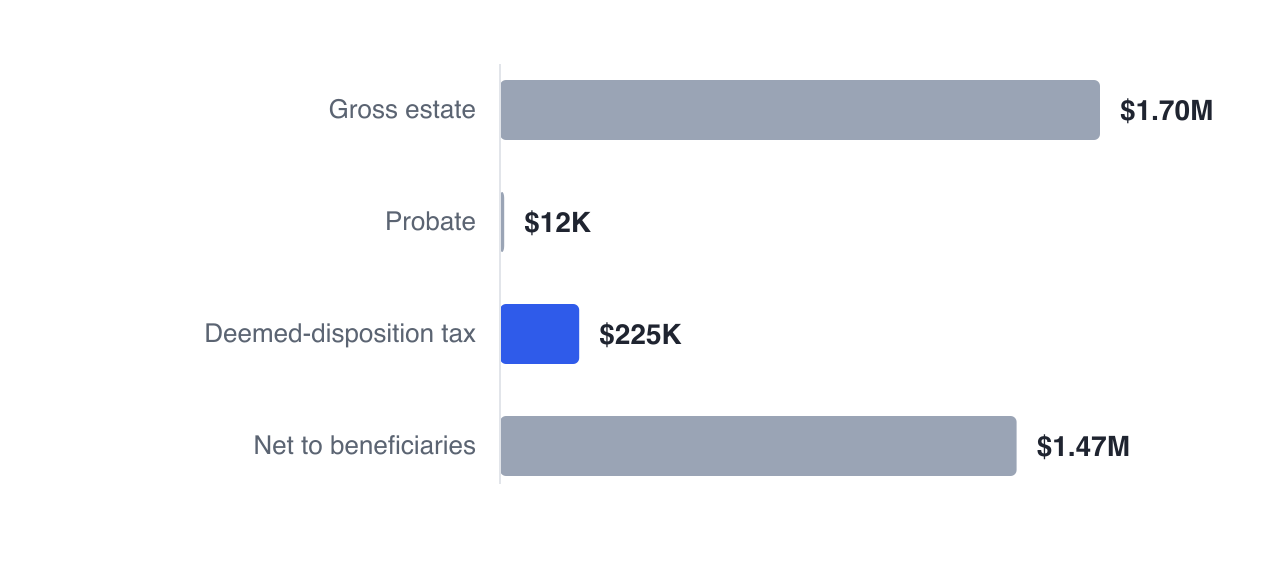
The proportions are the lesson. The tax is many times the probate fee, and almost all of it comes from the registered balance being collapsed into income. Probate planning attracts far more attention than it deserves relative to the line above it.
What actually reduces the big number
Drawing the registered balance down during your lifetime — the meltdown strategy from episode 52 — at moderate rates instead of leaving it to be taxed at the top rate in one year. Naming a spouse to defer. Moving money to a TFSA, which passes untaxed. Charitable giving, which generates a credit against the final return.
All of those are lifetime decisions. By the time the final return is being prepared the only remaining choices are administrative — which is why estate tax planning is really drawdown planning under a different name.
The estate summary decomposes the final year into gross estate, probate and the tax the deemed disposition triggers, so the largest line is visible decades before it is due.
Next: beneficiary designations versus your will — which document actually controls what.
GlidePathEngine is an educational planning tool — not financial, investment, tax, or legal advice.