TFSA room and the recontribution trap
TFSA room works on completely different principles from RRSP room: it ignores your income, it never expires, and it comes back when you withdraw. That last property is the one that generates penalty assessments every single year.
Where TFSA room comes from
Every Canadian resident accrues the same TFSA room each year from the year they turn 18, or from 2009 if they were already an adult then. The current annual amount is $7,000. Your income is irrelevant — someone earning nothing and someone earning a fortune accrue identically.
Unused room carries forward without limit. Someone who was 18 or older in 2009, has been resident since, and has never contributed has $109,000 of room available today. That figure is the single most common "I had no idea" moment in Canadian personal finance.
The withdrawal rule, stated precisely
Withdraw from a TFSA and the amount you withdrew is added back to your contribution room — on January 1 of the following calendar year. Not immediately. Not thirty days later. The following January.
Between the withdrawal and that date, the room simply is not there. If you put the money back before then, and you had already used your room, you have contributed more than you were entitled to.
The penalty is 1% per month on the excess, for every month any part of it remains. It is not a one-time charge, and it does not stop until the excess is withdrawn. That is a 12% annual rate on money that was doing nothing wrong sitting in a savings account.
$30,000 out in March, back in November
Priya — 54, Ontario, single. $118,000 salary, $410,000 in her RRSP and $88,000 in her TFSA, planning to retire at 63.
Suppose Priya has contributed her full TFSA room. In March she withdraws $30,000 to cover a large expense. In November the expense resolves, and she puts the money back — the natural thing to do with money you have finished needing.
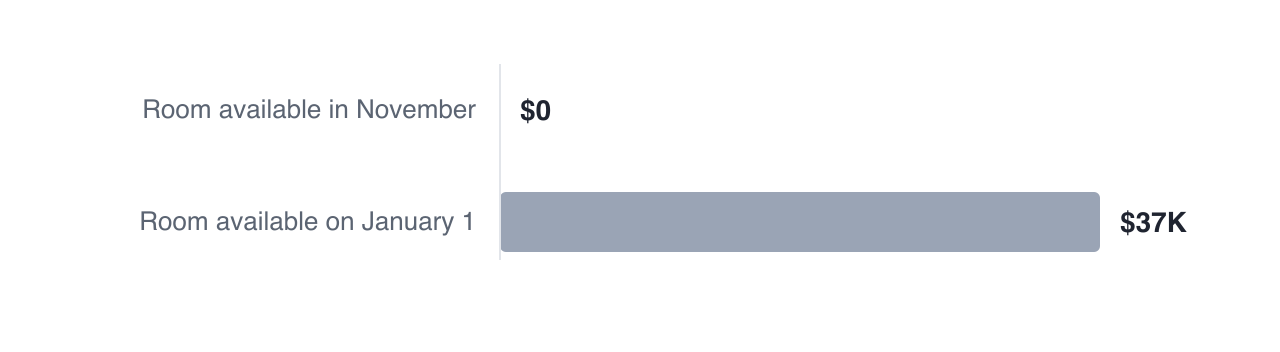
In November she has no room, so the whole $30,000 is an excess contribution. At 1% per month for November and December, that is $600 in penalties before the room resets and clears it — for a transaction that was economically neutral.
Waiting until January 1 costs nothing. She would then have $30,000 of restored room plus the new $7,000 for the year, and could recontribute the whole amount with capacity left over.
Two consequences of the same rule
Transfers between institutions should be direct. Withdrawing from one bank’s TFSA and depositing at another is a withdrawal and a contribution, with all of the above applying. A direct institution-to-institution transfer is neither, and it preserves your room.
Growth and losses do not change your room. If investments inside the TFSA rise, that gain is not a contribution and creates no problem. If they fall and you withdraw, you get back only what you withdrew — the lost value does not restore room. Which means a permanent loss inside a TFSA also permanently destroys the room that held it.
Enter your TFSA room in the accounts section alongside your planned contributions, and the plan flags an over-contribution against your own room before it becomes a penalty.
Next: why every number in a projection is in today’s dollars — and what goes wrong when it is not.
GlidePathEngine is an educational planning tool — not financial, investment, tax, or legal advice.