The annual review: a thirty-minute checklist
A plan built once and never revisited slowly stops describing your life. A plan rebuilt from scratch every year loses the thing that makes it useful — the ability to see whether reality is tracking what you projected.
Update the facts
- Account balances, as at a consistent date each year. This is the single most valuable update and takes about ten minutes.
- Income, if it changed. A raise, a job change, a business year that differed from the assumption.
- Contribution room, from your notice of assessment rather than from memory.
- Anything structural — a property bought or sold, a debt cleared, a new dependant, a change in retirement intentions.
Leave the assumptions alone
The expected return, the inflation rate and the horizon should not move because of one year’s market. That is the recency error from episode 33: revising the assumption upward after a strong year and downward after a weak one produces a plan that chases whatever just happened.
Long-horizon assumptions should change when the published guidance changes, or when your actual asset mix changes. Not annually, and not in response to the news.
One thing does update automatically: the tax and benefit data. Brackets, credits, contribution limits and benefit amounts are refreshed each year from published sources, so the $33,810 RRSP ceiling and the $7,000 TFSA limit in your plan are current without you touching them.
Then re-read three things
The readiness figure and the simulated success rate, to see whether they moved and why. The advice list, because a change in balances or income can make a recommendation material that was not last year. And, in the years approaching retirement, the drawdown order — which becomes a live decision rather than a distant one.
What a year of tracking shows
Priya — 54, Ontario, single. $118,000 salary, $410,000 in her RRSP and $88,000 in her TFSA, planning to retire at 63.
Priya’s plan ends at $399,597 with a success rate of 75.7%, on a $118,000 salary. Next year those three numbers will differ, and the useful question is which of the changes came from her behaviour and which from the market.
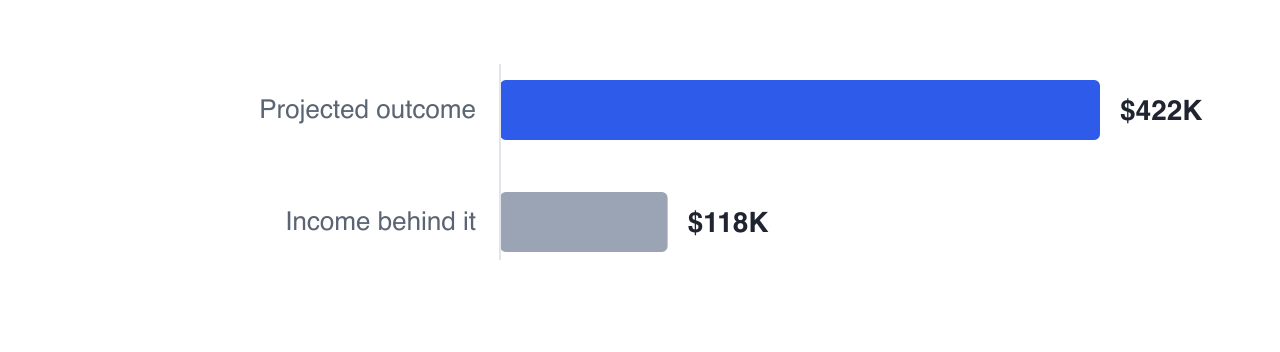
Separating those two is the whole point of logging actuals. A balance below projection because of a market year needs no response; the same shortfall because contributions did not happen needs a different one entirely.
The ten-year checkpoints
A few reviews deserve more than thirty minutes. The one around ten years before retirement, when the drawdown decisions stop being theoretical. The one at retirement itself, which episode 76 covered. And the one at 65, when benefit and conversion choices arrive together.
Between those, the annual pass is genuinely a half hour. Update the facts, log the year, read three numbers, and leave the assumptions where they were.
The actuals card records each year’s balances and income against the projection, so the comparison builds a track record instead of overwriting last year’s snapshot.
Next: putting it all together — a complete plan, start to finish.
GlidePathEngine is an educational planning tool — not financial, investment, tax, or legal advice.