Working while collecting CPP
Starting CPP does not end your relationship with the program. Keep working and each year of contributions buys an additional, separate lifetime pension — and after 65 you can choose whether to keep buying.
The post-retirement benefit
Once your CPP retirement pension has begun, further contributions no longer increase it — the pension amount is fixed. Instead they create a post-retirement benefit: a separate small pension, calculated from that year’s contributions, added to your income for life and indexed like the main benefit.
Each year of work generates its own increment. Someone who works five years past starting their pension accumulates five of them, each permanent.
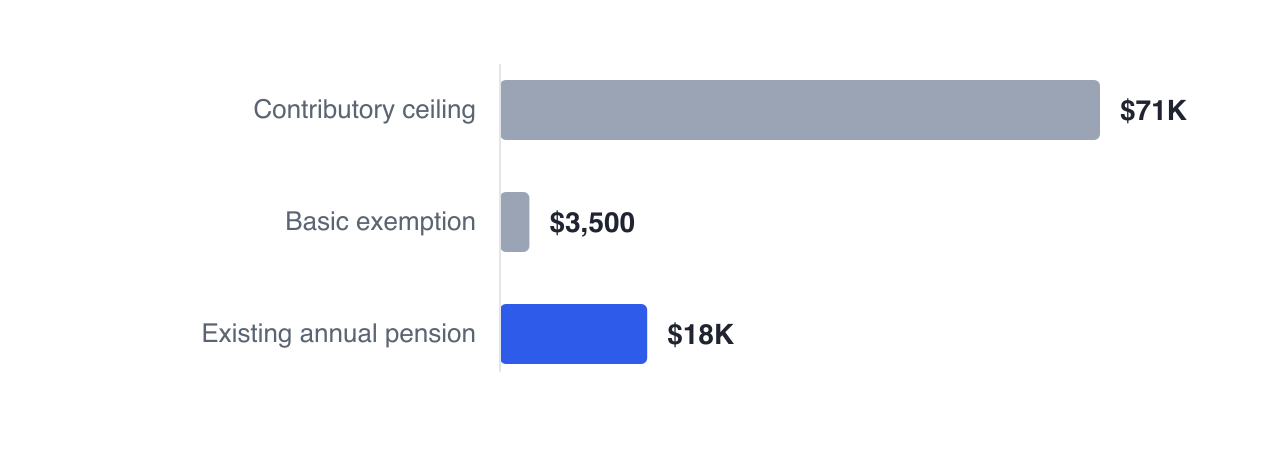
The contribution is 5.95% of earnings between the $3,500 exemption and the $74,600 ceiling, matched by an employer. The self-employed pay both halves, which changes the arithmetic considerably.
How to think about the elective decision
It is a purchase. You pay a contribution and receive an indexed lifetime income stream in return. For an employee, half the purchase price is paid by the employer, which makes it a good deal on almost any reasonable assumption about longevity.
For the self-employed it is a straight purchase at full price, and the case is genuinely arguable. The break-even depends on how long you live, and the money could instead be contributed to a registered account you control and can leave to an estate.
One asymmetry worth noting: the post-retirement benefit is indexed and cannot be outlived, which is a property no self-directed account has. That is worth something beyond the expected dollars, in the same way deferral was in episode 14.
What a contributing year is worth
Priya — 54, Ontario, single. $118,000 salary, $410,000 in her RRSP and $88,000 in her TFSA, planning to retire at 63.
Priya’s CPP is $18,092 a year at 65. If she worked past that and kept contributing, each additional year of contributions would add its own small increment on top — permanently, and indexed.
The increments are individually small, which is why the mechanism is easy to ignore. Over several working years past 65 they accumulate into a meaningful addition to a permanently indexed income — and unlike the deferral decision, this one does not require giving anything up in the meantime.
The interaction with everything else
Working while collecting CPP means employment income and pension income in the same year, which is a higher total than either alone. For someone near a clawback threshold, that combination is what trips it — and it is a strong argument for deferring the pension rather than collecting it alongside a salary.
Which is the honest summary of this episode: if you are still working and do not need the income, the interesting question is not whether to keep contributing but whether the pension should have started yet at all.
Set a salary that continues past your CPP start age and the projection shows both incomes in the same years — including what the combination does to your marginal rate and any clawback.
Next: catch-up contributions in your fifties, using room that has been accumulating.
GlidePathEngine is an educational planning tool — not financial, investment, tax, or legal advice.